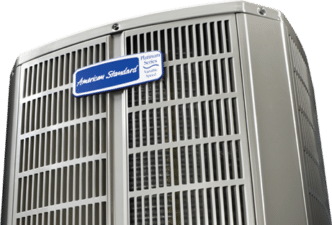
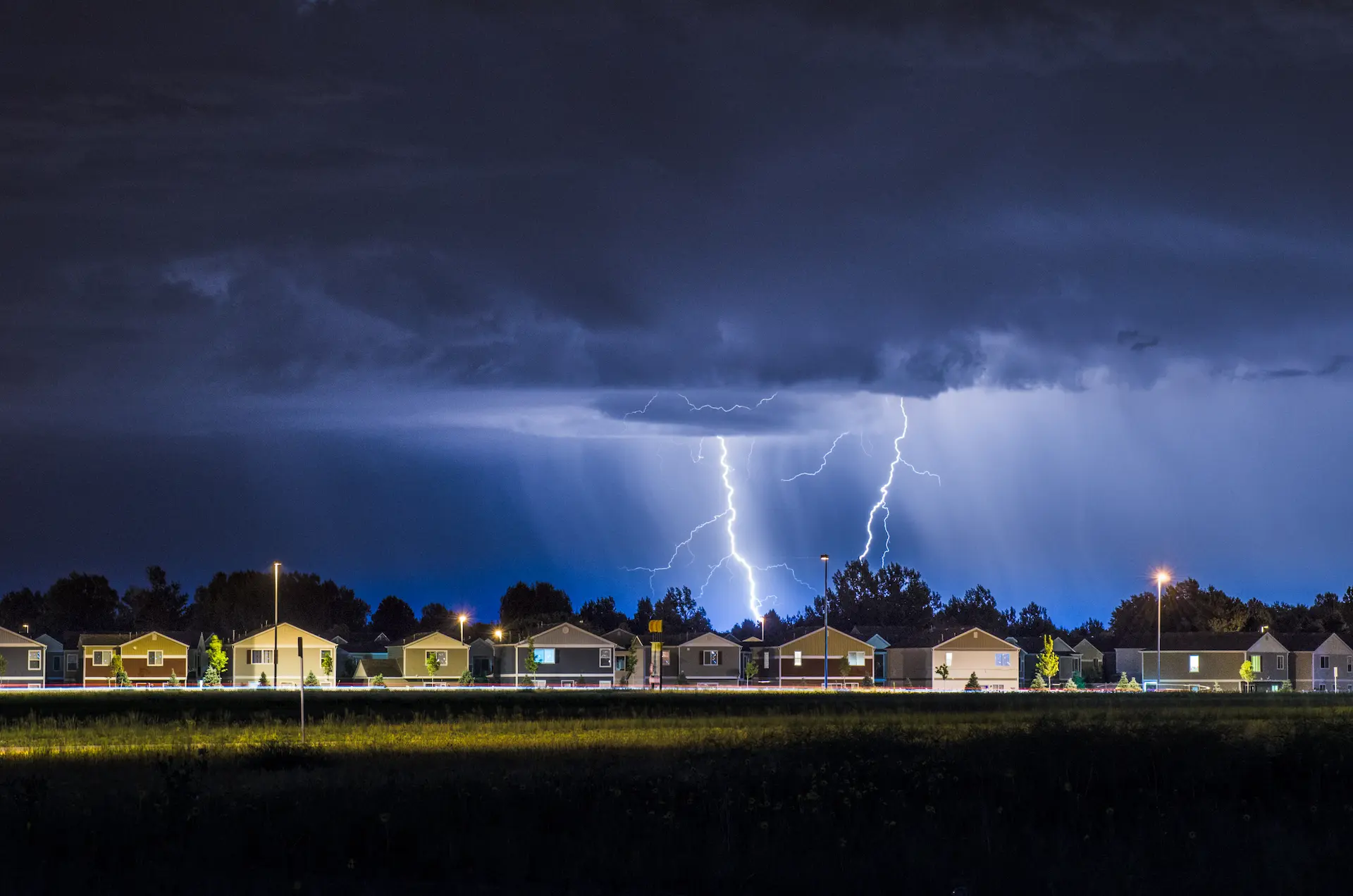
Late August is peak Gulf storm season, and a lightning strike or grid surge can wipe out an HVAC system, a panel, and a kitchen full of appliances in a single hit. If you live in Katy, Fulshear, Richmond, or Cypress, whole home surge protection is the layer that stops that voltage before it reaches your outlets.
A power surge is a sudden spike in voltage. Your home is built for a steady 120 or 240 volts. When lightning hits a nearby line, or the utility grid snaps back after an outage, thousands of extra volts can race through your wiring. Circuit breakers trip on overloads. They do not stop a surge. Without a protector at the panel, that spike has a clear path into your AC, refrigerator, TV, and every smart device on the wall.
Air Tech of Katy has installed electrical systems here since 1983. Our licensed electricians (Electrical: 592546; 39145) see the same pattern every storm season: the house looks fine, the lights come back on, and then the AC board is dead. This guide explains why that happens, how a whole-home protector works, and what to do before the next Gulf system arrives.
What a Power Surge Actually Does Inside a Katy Home
A surge does not have to look dramatic. Some are loud and obvious. Many are quiet. Both kinds cost money.
External surges: lightning and the grid
Lightning is the surge everyone pictures. A strike on a transformer, a pole, or a neighbor’s line can send a massive voltage spike down the service drop and into your meter. You do not need a direct hit on your roof. A strike a few streets over is enough.
Grid surges are just as common during Gulf storm season. When a feeder trips and then recloses, or when crews restore power after a wind event, the returning electricity is not always clean. That “snap back” can punch through electronics that were sitting quietly on standby.
Downed lines, tree limbs on secondary wires, and switching events at substations all produce the same result: extra voltage arriving at your electrical panel faster than any breaker can react.
Internal surges: the ones that happen on a clear day
Not every surge comes from the sky. Large motors in your own home create small spikes every time they kick on or shut off. Your air conditioner, refrigerator, well pump, and garage door opener all do this. One spike will not usually kill a board. Hundreds of them, year after year, wear out circuit boards, compressors, and control modules until something fails on a 98-degree afternoon.
That is why whole-home protection is not just a storm-season product. Storm season is when the big hits arrive. Everyday cycling is what shortens the life of the equipment you already own.
Why a Surge Fries HVAC, Panels, and Appliances
Modern homes are packed with electronics. That is the problem.
HVAC systems
Today’s air conditioners and heat pumps run on circuit boards, sensors, and variable-speed motors. Those boards are far more sensitive than the electromechanical controls in older units. A surge can:
- Burn the outdoor condenser control board
- Kill the indoor air handler board or thermostat
- Damage a variable-speed blower motor
- Wipe the communicating controls that tie the system together
Replacing a board is expensive. Replacing a compressor or a full system is worse. The unit may still run after a surge and then fail days later, which makes the cause easy to miss.
Electrical panels
The panel is the first stop for incoming power. A large surge can pit bus bars, weld a breaker in place, or damage the main lugs. After that, you may see breakers that will not reset, circuits that stay dead, or a panel that feels warm to the touch. An older panel (20 to 30 years) is even less able to take that hit. If your panel is already struggling with today’s load, a storm surge can be the event that finishes it.
Appliances and electronics
Refrigerators, washers, garage-door openers, TVs, computers, Wi-Fi routers, and smart thermostats all have boards that fail first. A kitchen that “looks fine” after a storm can still have a dead fridge compressor or a dishwasher that will not start. Strip protectors at a few outlets do nothing for hardwired appliances or for the HVAC sitting outside.
Insurance may cover a documented lightning claim. It often will not cover gradual damage from smaller surges, and deductibles can exceed the cost of the failed part. Preventing the hit is cheaper than arguing about it later.
How Whole Home Surge Protection Works
A whole-home surge protector mounts at your electrical panel. It watches the voltage coming into the house. When that voltage jumps above a safe threshold, the device diverts the extra energy to ground before it can travel down your branch circuits.
Think of it as a pressure-relief valve for electricity. Normal power passes through. Excess voltage gets shunted away.
Primary protection at the panel
This is the main line of defense. Installed on or next to the panel, the protector covers every circuit that leaves that box: HVAC, kitchen, laundry, garage, and living spaces. It is the only practical way to protect hardwired equipment you cannot unplug.
Air Tech of Katy’s whole-home surge protection installs are sized to the home and tied into a proper ground. A protector without a solid ground path cannot do its job.
Point-of-use protection for delicate gear
Panel-level protection handles the big incoming spike. Sensitive electronics (computers, TVs, audio, home-office equipment) still benefit from a quality outlet protector as a second layer. That combination is the standard approach our electricians recommend: stop the surge at the panel, then add a little extra cushion at the desk or entertainment center.
What a whole-home unit does not do
It will not keep the lights on during an outage. That is a generator’s job. It will not replace a failing panel or fix undersized wiring. And it cannot stop a direct lightning strike on the structure itself, which is a different kind of event. What it does, reliably, is cut off the voltage spikes that travel in through the utility service, which is how most surge damage actually happens.
Power Strips Are Not Whole-Home Protection
A $15 strip under the TV protects one or two cords. It does nothing for:
- The outdoor AC condenser
- The furnace or air handler
- The refrigerator and freezer
- The washer, dryer, and dishwasher
- Hardwired lighting, garage openers, and well pumps
- Anything plugged into an unprotected outlet in another room
Those strips also wear out. Many have no indicator that the protection is spent, so they become ordinary extension cords. A panel-mounted protector is built for the whole service, is visible at the box, and can be inspected or replaced as a single device.
If you already own a few strips, keep them. Just do not treat them as a substitute for protection at the panel.
Late August Is the Window to Install, Not the Weekend After the Storm
Gulf hurricane season runs June through November. Late August sits in the heart of it. That is when Katy, Fulshear, Richmond, and Cypress see the combination that produces surges: thunderstorms, high winds, wet ground, and utility switching.
The worst time to call is the morning after a widespread outage. Crews are booked, parts move slower, and every neighbor with a dead AC is in the same queue. The better move is to have the protector in place before the next system organizes in the Gulf.
If you are already working through a broader storm checklist, pair this install with the rest of your prep. Our guide on how to be prepared this hurricane season covers HVAC shutoff, outdoor-unit protection, and the other steps that keep a Katy house ready. Surge protection belongs on that same list, next to flashlights and a charged phone, not after the fact.
A typical install is a scheduled electrical visit. The technician confirms panel condition and grounding, mounts the protector, and tests the circuit. If the panel is outdated, overloaded, or showing heat damage, they will say so before adding new equipment. That honesty is part of the job.
Signs Your Home Is Due for Surge Protection (or a Panel Check)
You do not need a storm to justify this. Watch for:
- Frequent breaker trips, especially on HVAC or kitchen circuits
- Lights that flicker when the AC or refrigerator starts
- A panel that is 20-plus years old, warm, or rusted
- A recent remodel, EV charger, or generator that added load
- Electronics that fail earlier than they should
- A home that has never had a protector at the panel
Any of those is a reason to have a licensed electrician look at the service. Sometimes the right answer is a protector. Sometimes the panel itself needs work first. Air Tech of Katy handles both, along with the rest of our electrical services, so you are not coordinating two companies for one box on the wall.
Right now we are running $100 off whole home surge protectors. Electrical repairs also qualify for 0% APR financing with approved credit.
Why Katy Homeowners Call Air Tech
Air Tech of Katy is a local HVAC, plumbing, and electrical company, not a surge-only vendor. That matters after a storm, when the same visit may involve a dead AC board, a tripped panel, and a protector that needs to be installed or replaced.
If a surge already took out equipment, call. If it has not, this is the week to get ahead of it.
Frequently Asked Questions
Does whole-home surge protection stop lightning damage?
It is designed to stop the voltage spikes that travel in through utility lines after a nearby strike or a grid event. That is how most surge damage reaches HVAC, panels, and appliances. A direct strike on the house is a separate, much rarer event. No residential device can claim to absorb a direct hit.
Will it protect my air conditioner?
Yes, that is one of the main reasons to install at the panel. The outdoor unit and indoor air handler are hardwired. Outlet strips cannot reach them. A panel-mounted protector is the device that sits between the service and those circuits.
Do I still need outlet protectors?
For computers, TVs, and other sensitive plug-in electronics, a quality point-of-use protector is a useful second layer. It is not a replacement for whole-home protection.
How long does installation take?
Most homes are a single scheduled visit once the panel and grounding are confirmed. If the panel needs repair or replacement first, that work comes before the protector goes on.
Is this only useful during hurricane season?
No. Internal surges from AC and appliance motors happen year-round. Storm season is simply when the largest external spikes are most likely, which is why late August is a smart time to get it done.
Get Whole Home Surge Protection Installed Before the Next Gulf System
A strike or a grid surge does not give you a warning light. It arrives, it hits the panel, and then you find out what survived. Whole home surge protection is the device that interrupts that path.
Call Air Tech of Katy at 281-201-0545 to schedule an install in Katy, Fulshear, Richmond, or Cypress.
Do not wait for the morning after the outage. Get the protector on the panel while the Gulf is still quiet.

Why Choose Air Tech of Katy?
Katy’s Reliable Heating, Cooling, Plumbing and Electrical Company

Peace Of Mind Guarantee

30% Utility Savings Guarantee